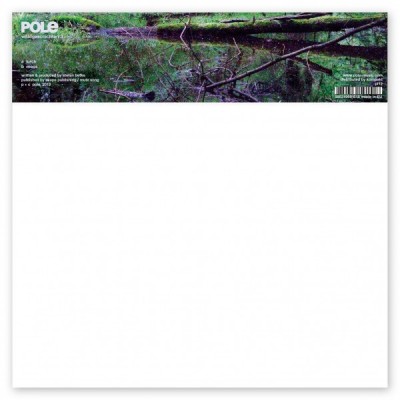
Since the release date of the album “Wald” in September 2015 we have found quite a bit of interesting reviews and articles in international press and online magazines.
Thank you to all the the journalists who wrote some critical articles about my new album and for your support!
Resident Advisor 07.10.2015
„Betke’s complex work has never been so joyful, free and emotionally rounded….This is a record of great technical skill and imagination, and one that’s also nonetheless soulful and sincere. It’s a testament to Betke’s artistic integrity that he waited patiently for eight years, only releasing Wald because he had something fresh and distinctive to offer.“
Electronic Beats Magazine (print) autumn 2015 (by Deadbeat)
„At a time when so many musicians are lazily mining the past in lieu of charting new creative tracts, WALD is truly a breath of fresh air.“
Drowned In Sound 15.10.2015
As usual, however, Betke knows exactly what he’s doing. Wald, like 2007’s excellent Steingarten and 2003?s underrated self-titled effort, is an evolution of the minimalist dub techno sound Betke first pioneered in the late 1990s…. Unlike those two records, Wald is truly the sound of Pole without filters. Textures bleed into one another to create something that is consistently both beautiful and mysterious. …Yet it is also wholly different from previous works, making it an extremely successful comeback from a true master of modern electronic music.
XLR8R Feature 28.09.2015
„Betke’s just put out Wald, his first full album since 2007’s Steingarten—and it’s perhaps his most intimate and contemplative work yet. Wald’s a peaceful and warm collection of song—it’s a welcoming, beguiling record, despite that crackle and the occasional shard of distortion. It’s also a plain old great sounding set, proof of his years spent toiling in the mastering business. „
Inverted Audio Feature 11.09.2015
„The music of Stefan Betke aka Pole is in a constant state of flux. His recordings are evidence of his musical evolution, milestones along an open-ended journey. But this does not mean Pole’s albums are provisional or incomplete; on the contrary, they express a kind of perfectionism always aimed at reaching an imagined musical core. For Pole musical reductionism isn’t repetitive or deterministic. It involves constant motion around an ideal core, the smallest possible unit. As a result, all of Pole’s releases, despite their differences, are united by a central question: “How can one extract the most intensity from the least amount of material as possible?”
Forestpunk 20.09.2015
….Unsurprisingly, Betke´s music sounds very, very good indeed. The Bass is deep and crisp, having a hefty dubstep growl, while being tight and focused like a techno track. All of this is filtered through Betke´s dub sensibilities, giving the omnipresent feeling of disembodied hands on the faders. In a world full of possibilities, Betke knows when to keep it simple……
The Wire (print) 9/15
„Given his stylistic transformations in the 2000s were accompanied by a slowdown in releases – from four albums in as many years to a four year wait between 2003’s Pole and 2007’s Steingarten – Wald comes loaded with expectations of creative seclusion producing yet further radical shifts in style…. The cleaner, brighter sound of that record, borrowing bounce from hiphop and the unprecedented use of actual guitars from Fennesz, remains. On Wald, Betke builds on it, producing an album with a grasp of sensuality at the other extreme from the soft, grainy abstraction of the dub techno releases with which he first made his name.“
Dusted Magazine 18.09.2015
“…..Even with incremental developments in the Pole style, Wald surprises and creates suspense. “Eichelhäher” works with a metallic screech on a hobbled repeat. On some passes, it rips, other times it wheezes. Measure by measure, more hairy tones work their way in, ‘til by then end, it’s a half-dozen broken motors spinning. Only Betke could make such a pile of distortion feel so free of aggravation. Stepping gingerly and keeping balanced in precarious places, Wald is a cat. It’s as pleasing as a purr.”
Pitchfork 15.09.2015
“…..Those dub mechanics have a lot to do with the music’s flexible rhythms and odd syncopations, which contribute to the mercurial sense of flow: There are almost always more elements in play than you can track, and whatever silvery filament you choose to focus on, your attention will soon be hijacked by something else. Still, there’s nothing hectic about the listening experience;…..Wald is every bit as contemplative as the forest walks that inspired it. It has an unfettered sense of motion that, for an artist who was once, by his own admission, stuck in a rut, sounds like the sweetest kind of freedom.”
Cyclic Defrost 20.09.2015
“….As you’d expect, the nine tracks collected within exhibit evidence of a considerable shift in Betke’s sound over the ensuing years, but while there’s an increased use of both clarity and distortion, familiar traces of his dubby roots remain firmly in place.”